AI needs more power. Its grid tools could also free up capacity.
The IEA projects rising data-center electricity demand while identifying opportunities for AI to improve grid operation.
The short version
- The IEA’s 2025 base case projected global data-center electricity use at around 945 TWh in 2030—more than double its 2024 level.
- The report estimated that sensors and AI-based management could unlock up to 175 GW of transmission capacity without building new lines.
Why it matters. The energy story has two sides: supplying computing and improving the systems that deliver electricity.
More demand, and another use for AI
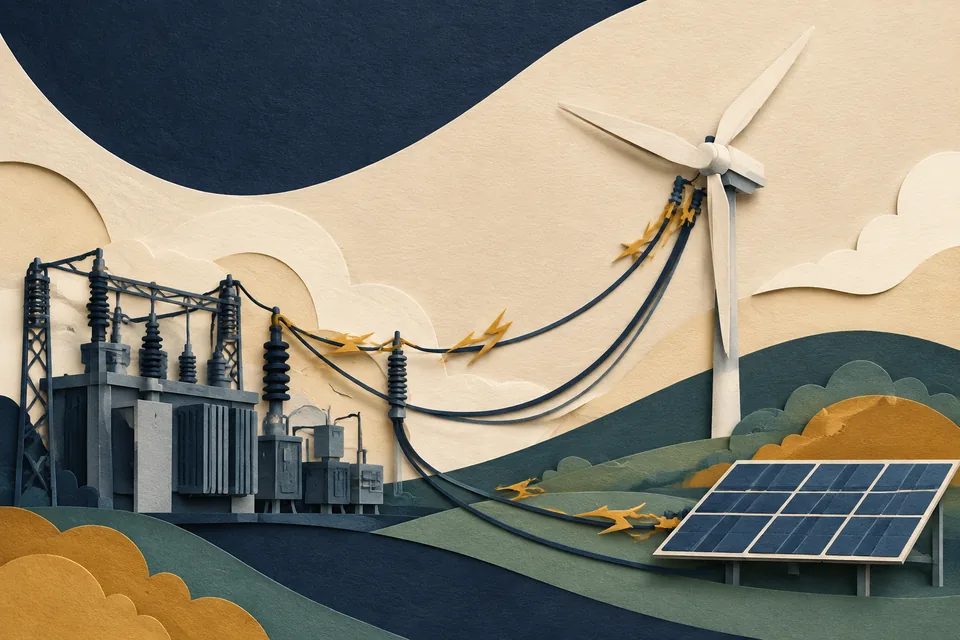
The IEA’s analysis describes AI tools for locating grid faults, forecasting renewable generation and managing transmission assets. Making existing equipment more useful could help where new infrastructure takes time.
The numbers describe different things: electricity consumed over a year and the capacity of a network. They are not an automatic offset. Nor are the report’s opportunities already-delivered savings.
The potential benefit is a more capable energy system. Realizing it depends on deploying the tools, connecting the infrastructure and meeting local operating constraints.
The supporting record
The IEA examines data-center power demand and AI applications in the energy system.
The IEA projected about 945 TWh of global data-center electricity use in 2030.
The report estimates up to 175 GW of transmission capacity could be unlocked by sensors and AI-based management.
What we do not yet know
- The realized net effect of a particular AI deployment on energy use.
- Which modeled opportunities will scale under local operating conditions.
- How the costs and gains will be distributed across communities.
Original documents, with context
Sources you can inspect
1. Energy analysis · International Energy Agency
Energy and AI
Separate observed data, projections, and modeled opportunities. Data-center totals include non-AI workloads.
Publication: 2025 · Checked: 2026-09-07
Source record: iea-energy-ai
Location in source: Report overview and energy-sector applications2. Energy analysis · International Energy Agency
Energy and AI: executive summary
2025 projections and modeled opportunities, not delivered outcomes. Transmission capacity (GW) and electricity consumption (TWh) are different quantities; data-center demand includes non-AI workloads.
Publication: 2025 · Checked: 2026-09-07
Source record: iea-energy-ai-summary
Location in source: Electricity demand for data centres more than doubles by 2030; AI could unlock major efficiency and operational gains for the energy sector3. Research observatory · International Energy Agency
Energy and AI Observatory
A discovery resource. Each numerical chart requires its specific underlying data and assumptions.
Publication: Continuously maintained resource · Checked: 2026-09-07
Source record: iea-observatory
Location in source: Observatory overview
Corrections & additional evidence · support@aipublicopinion.com